The Vinyl Sustainability Council (VSC) drives measurable progress across the U.S. vinyl industry through the +Vantage Vinyl verification program. This annual update highlights verified achievements, year-over-year improvements, and leadership in key areas that define the industry’s sustainability performance.
How Verification Works
+Vantage Vinyl is the industry’s sustainability verification program. Each participating company completes an independent third-party audit by GreenCircle Certified LLC, confirming its performance against 29 Guiding Principles organized within five sustainability pillars.
To earn verification, companies must meet at least 50% compliance with the Guiding Principles, including all mandatory criteria. Companies surpassing 80% compliance can achieve Silver or Gold designations, recognizing advanced and innovative sustainability practices.
This process assures customers and stakeholders that verified companies are actively improving operations and contributing to industry-wide sustainability goals.
Company Compliance
+Vantage Vinyl Gold
+Vantage Vinyl Silver
+Vantage Vinyl Verified
Minimum compliance necessary to be +Vantage Vinyl verified
+ Vantage Vinyl Gold: A company has achieved 100% compliance to all applicable Guiding Principles and has implemented at least two Advanced Practices and one Innovative Practice Achievement.
+ Vantage Vinyl Silver: A company has achieved more than 80% compliance to all applicable Guiding Principles and has implemented at least one Advanced Practice Achievement.
All 15 companies who are doing the full verification, 4th year, are now Silver or Gold level
First-time +VV companies
Of program participants met the 50% conformance verification minimum
Average conformance rate of +VV verified companies
On average, +VV verified companies increased conformance by 1.4% from 2023 to 2024
Average conformance within the Environmental Stewardship Pillar
Average conformance within the Social Diligence Pillar
Average conformance within the Economic Soundness Pillar
Average conformance within the Collaboration Pillar
Average conformance within the Open Communication Pillar
Measuring What Matters
The +Vantage Vinyl® Guiding Principles are structured around five sustainability pillars that serve as a roadmap for continuous improvement. Each verified company reports annually on progress within the pillars that apply to its operations.
Environmental Stewardship: We strive to protect our natural environment, biodiversity, and ecosystems.
Social Diligence: We aim to manufacture safe and user-friendly products while taking care of our employees and communities.
Economic Soundness: We promote open and fair competition, support sustainability education and research, and integrate resource conservation and efficiency into business planning.
Collaboration: We work within the industry to find solutions and with external stakeholders to ensure we are on the right track.
Open Communications: We value transparency and use data to communicate our progress when promoting the +Vantage Vinyl program.
Together, these results show how the industry continues to raise its sustainability standards year after year.
Environmental Stewardship
Achieved
Not Fulfilled
Not Applicable
Achieved: A company provided documentation to support the achievement or a particular guiding principle.
Not Fulfilled: A company did not provide documentation to support the achievement or a particular guiding principle.
Not Applicable: A particular guiding principle is not relevant to a company’s manufacturing process.
Social Diligence
Achieved
Not Fulfilled
Not Applicable
Achieved: A company provided documentation to support the achievement or a particular guiding principle.
Not Fulfilled: A company did not provide documentation to support the achievement or a particular guiding principle.
Not Applicable: A particular guiding principle is not relevant to a company’s manufacturing process.
Economic Soundness
Achieved
Not Fulfilled
Not Applicable
Achieved: A company provided documentation to support the achievement or a particular guiding principle.
Not Fulfilled: A company did not provide documentation to support the achievement or a particular guiding principle.
Not Applicable: A particular guiding principle is not relevant to a company’s manufacturing process.
Collaboration
Achieved
Not Fulfilled
Not Applicable
Achieved: A company provided documentation to support the achievement or a particular guiding principle.
Not Fulfilled: A company did not provide documentation to support the achievement or a particular guiding principle.
Not Applicable: A particular guiding principle is not relevant to a company’s manufacturing process.
Open Communication
Achieved
Not Fulfilled
Not Applicable
Achieved: A company provided documentation to support the achievement or a particular guiding principle.
Not Fulfilled: A company did not provide documentation to support the achievement or a particular guiding principle.
Not Applicable: A particular guiding principle is not relevant to a company’s manufacturing process.
vvChartBarStackedHorz(`[[dataset:"2022"]]
"Guiding Principles/Number of Companies","Achieved", "Not Fulfilled", "Not Applicable"
"Responsible Supplier Sourcing Practices",7,1,9
"Responsibly Recycle Products that Contain RoHS Ingredients",6,1,10
"Sustainable Materials Management",4,1,12
"Reduce Waste - Pathway 2",0,0,0
"Reduce Waste - Pathway 1",14,3,0
"Improve the Energy and Emission Profile of PVC Products",14,3,0
"Support Third-Party Water Conservation Programs",12,5,0
"Water Reuse and Water Conservation Practices",15,2,0
"Preserve Natural Land, Biodiversity, and Ecosystems",13,4,0
"Historical GHG Emissions Data",13,4,0
"GHG Emissions Data",12,5,0
[[dataset:"2023"]]
"Guiding Principles/Number of Companies","Achieved", "Not Fulfilled", "Not Applicable"
"Responsible Supplier Sourcing Practices",13,7,6
"Responsibly Recycle Products that Contain RoHS Ingredients",13,2,11
"Sustainable Materials Management",9,2,15
"Reduce Waste - Pathway 2",5,0,21
"Reduce Waste - Pathway 1",21,0,5
"Improve the Energy and Emission Profile of PVC Products",16,10,0
"Support Third-Party Water Conservation Programs",11,15,0
"Water Reuse and Water Conservation Practices",26,0,0
"Preserve Natural Land, Biodiversity, and Ecosystems",26,0,0
"Historical GHG Emissions Data",9,3,14
"GHG Emissions Data",26,0,0
[[dataset:"2024"]]
"Guiding Principles/Number of Companies","Achieved", "Not Fulfilled", "Not Applicable"
"Responsible Supplier Sourcing Practices",21,6,3
"Responsibly Recycle Products that Contain RoHS Ingredients",20,4,6
"Sustainable Materials Management",20,1,9
"Reduce Waste - Pathway 2",4,0,26
"Reduce Waste - Pathway 1",26,0,4
"Improve the Energy and Emission Profile of PVC Products",24,6,0
"Support Third-Party Water Conservation Programs",13,17,0
"Water Reuse and Water Conservation Practices",30,0,0
"Preserve Natural Land, Biodiversity, and Ecosystems",29,0,1
"Historical GHG Emissions Data",1,0,29
"GHG Emissions Data",30,0,0`, JSON.parse('{"containerSelector":"","revealOnView":,"revealDelay":"0"}'));
Past Progress Reports
Progress Reports through the year 2023 are available as PDFs to view or download.
Guided by its Materiality Assessment, the VSC focuses on three core impact categories that deliver the greatest value to the environment and society.
Resource Efficiency: Addresses the priority areas of end-of-life disposition, landfill avoidance, and recycling.
Emissions: Addresses the priority areas of emissions to air, water, and soil, emphasizing climate and biodiversity impacts.
People & Community: Addresses the priority areas of community health and safety and user health and safety.
These areas reflect the material priorities identified by VSC members and serve as the foundation for collective progress.
A Commitment to Recycling
An analysis of the current state of PVC recycling in the United States and Canada finds both achievements and challenges in advancing circularity within the industry. The Vinyl Institute report on the state of PVC recycling outlines pathways for improvement—including coordinated industry action, infrastructure investment, and emerging technologies—and emphasizes the need for reliable data and collaboration to set achievable goals, reduce environmental impact, and create economic value through enhanced PVC recycling.
The following sponsors contribute additional support to accelerate VSC communications and sustainability outreach. Click their logos below to learn how each is driving progress within their own operations.
Their leadership exemplifies how verified members are turning sustainability commitments into measurable results.
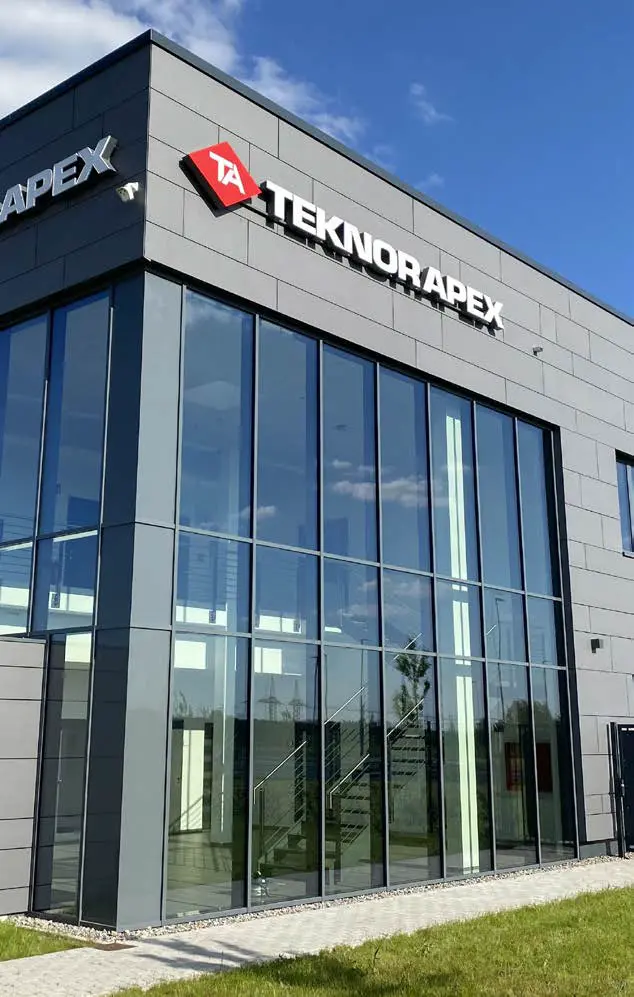
Teknor Apex, a privately held, global leader in the development and manufacture of highperformance vinyl compounds, celebrated our 100th anniversary in 2024. With a century of innovation and industry expertise, the company has been a pioneer in sustainable plastics solutions, including the extensive use of PVC recyclate in the production of our garden hoses.
One of Teknor Apex’s most notable contributions to sustainability in vinyl is our development of BioVinyl® Flexible PVC. This bio-based vinyl compound offers a more sustainable alternative to traditional vinyl products. By incorporating bio-based plasticizers and bio-attributed resin during the compound manufacturing process, BioVinyl reduces the reliance on fossil fuels and provides customers with a more sustainable option for various applications, including flooring, wire and cable, and automotive components.
Another key aspect of Teknor Apex’s sustainability efforts in vinyl is evident in our Cycle-Tek® family of flexible PVC compounds. Cycle-Tek compounds are produced from post-consumer recyclate (PCR) or post-industrial recyclate (PIR), offering manufacturers a sustainable solution that performs equivalently to prime compounds. By incorporating recycled materials, Cycle- Tek compounds reduce the demand for virgin PVC, conserving resources and minimizing the environmental impact of production. This solution allows landfill avoidance and facilitates manufacturers in meeting their sustainability goals while maintaining the quality and performance of their products.
Teknor Apex’s dedication to sustainability is not limited to product development. We have also implemented various initiatives to improve our manufacturing processes and reduce our environmental footprint. These efforts include energy efficiency measures, waste reduction programs, and responsible sourcing of raw materials. By continuously striving to minimize our environmental impact, Teknor Apex is demonstrating our leadership in sustainable vinyl solutions.
The +Vantage Vinyl®-verified company featured on this page contributed additional funds to the VSC marketing communications program so you can read in its own words how it is making a difference by working to enhance sustainability in its own businesses.
Building A Better Tomorrow
Cornerstone Building Brands is dedicated to Building a Better Tomorrow for our customers, communities, and future generations. We believe in working safely, responsibly, and ethically across our organization and communities to achieve this goal. We continue to enhance our sustainability program while delivering industry-leading building solutions.
Better Resource Efficiency
Building a better tomorrow requires careful stewardship of natural resources today. Cornerstone Building Brands is on a journey of continuous improvement, ensuring compliance with environmental regulations and requirements while developing new programs and strategies. Areas of focus include waste diversion and product circularity programs, reducing water and materials use and responsible sourcing and securing of supplies.
Giving Vinyl Siding A New Life
Cornerstone Building Brands participates in Polymeric Exterior Products Association’s (PEPA) recycling program to use scrap vinyl from house demolitions as source material in new vinyl siding. In FY 2023, over 400,000 pounds of vinyl was recycled in partnership with PEPA, diverting it from landfills and reducing the need for virgin plastic raw materials.
In 2017, Cornerstone Building Brands formalized a partnership with a national home builder to reclaim scrap vinyl siding, reduce packaging, and decrease the amount of wood needed for vinyl siding transportation by using bulk crates. In 2023, the program reclaimed more than 1.6 million pounds of scrap for recycling. Additionally, approximately 5,750 bulk crates were returned, repaired, and reused.
The +Vantage Vinyl®-verified company featured on this page contributed additional funds to the VSC marketing communications program so you can read in its own words how it is making a difference by working to enhance sustainability in its own businesses.
Driving Down Environmental Impact In The U.S.
Orbia’s Polymer Solutions business, Vestolit, pursues its sustainability initiatives in close collaboration with Orbia’s corporate sustainability team. Orbia Vestolit remains one of the most significant contributors to several of Orbia’s sustainability metrics, and actions taken by Orbia Vestolit drive a large part of our organization’s progress towards sustainability commitments. Over the last few years, one of our U.S. sites (Henry, Illinois) has taken a multi-pronged approach towards a more sustainable operation.
Climate Change
As of 2023, Vestolit contributes ~70% of the total Scope 1+2 emissions for all of Orbia. To meet Orbia’s goal of a 47% reduction in Scope 1+2 emissions by 2030, deliberate and significant action is required on Orbia Vestolit’s part.
Since 2019, our commitment to lowering carbon emissions has been consistent. The first major step in lowering Scope 1 emissions came in 2021 when the site phased out our coal-fed boiler and switched to a natural gas-fired boiler. This reduced the Scope 1 emission intensity of the plant by 35%. We also managed to improve the plant’s energy efficiency, and by 2022 had reduced energy intensity by 28% compared to the 2019 baseline.
The +Vantage Vinyl®-verified company featured on this page contributed additional funds to the VSC marketing communications program so you can read in its own words how it is making a difference by working to enhance sustainability in its own businesses.
Raising The Roof,
Putting Sustainability On Top
A +Vantage Vinyl®-verified company, Sika’s commitment to sustainability is evident across our enterprise – in our product innovations and in our manufacturing operations.
A worldwide leader in thermoplastic, single-ply commercial roofing, Sika became the first manufacturer in our industry to complete cradle-to-grave declarations for single-ply roofing solutions with our Sarnafil roof membranes. Our company has published Environmental Product Declarations (EPDs) for Sarnafil® S 327 and G 410 single-ply PVC roofing membranes. The EPDs deliver detailed environmental impact data developed in a life-cycle analysis of the products. This traces the product’s journey from raw material extraction to production, delivery to a job site, installation, maintenance, and end of service life. This level of detail empowers key construction stakeholders – architects, contractors, and building owners – to make more informed decisions about the environmental impact of the products they specify for a commercial roofing project. A key driver to Sika’s ability to publish this cradle-to-grave EPD is our ongoing roof take back program which allows closed-loop recycling of our old PVC roofs. These materials are combined with pre-consumer recycled content in our plant to produce new roof membranes. Since the launch of the program, Sika has recycled over 99 million pounds of pre- and post-consumer material back into new roofing membrane.
The +Vantage Vinyl®-verified company featured on this page contributed additional funds to the VSC marketing communications program so you can read in its own words how it is making a difference by working to enhance sustainability in its own businesses.
Discover the Vinyl Industry’s Progress
Explore verified data, pillar performance, and real-world examples of leadership driving sustainability across the vinyl value chain.