


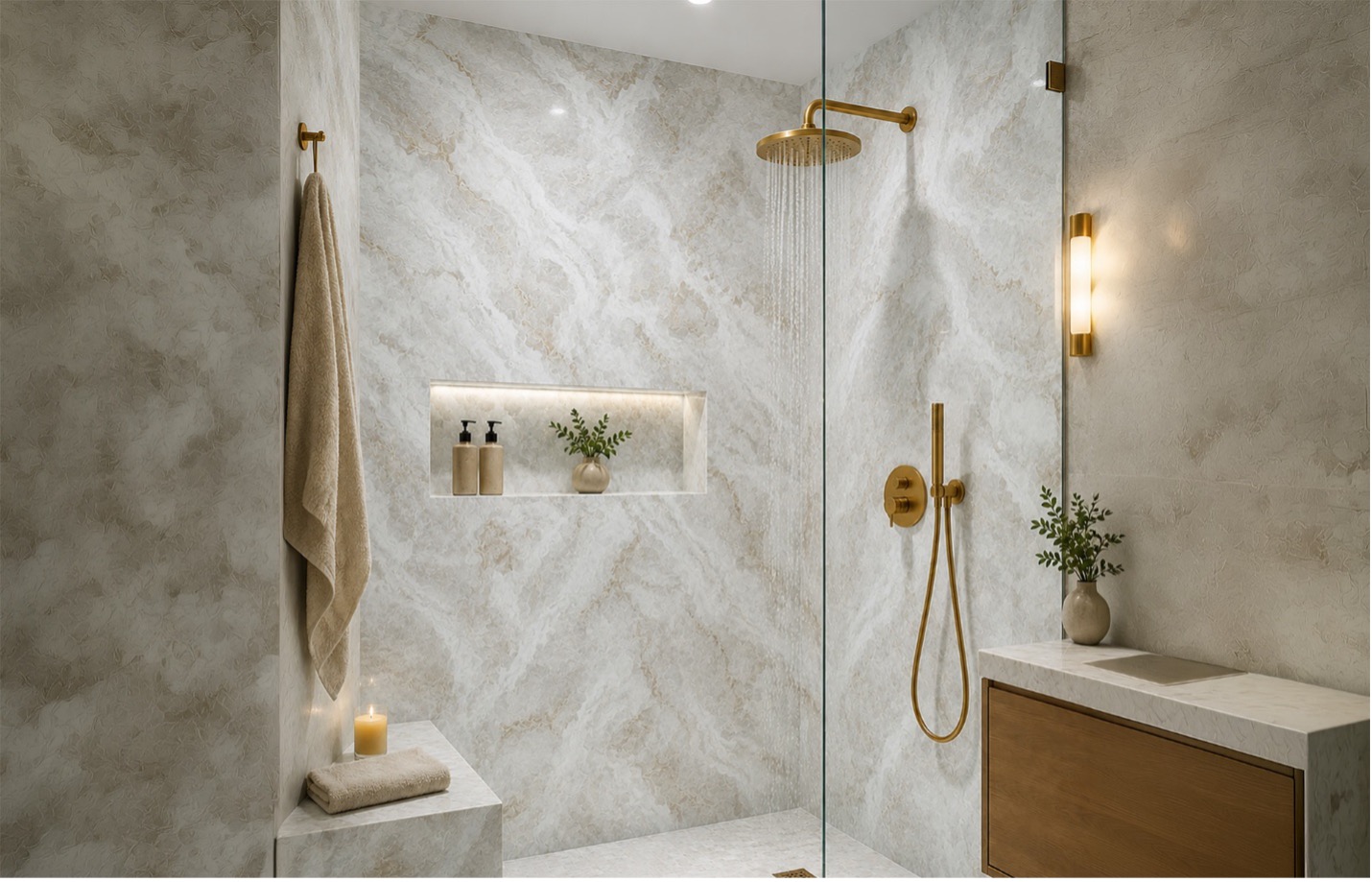
How Modern Vinyl Is Redefining Affordable Luxury & Sustainability in Home Design
Vinyl, or PVC, is everywhere in homes today. Step into any newly designed home, and you’ll likely be walking on, looking at, or protected by vinyl. It’s underneath your feet in luxury vinyl tile or plank flooring in finishes that look like the finest woods. It’s on the kitchen cabinets as rich, textured architectural film. It’s wrapping the exterior in a beautiful aesthetic resembling stone and cedar shake.
Vinyl has quietly become the go-to solution for modern home design. Homeowners and designers are turning to it because it solves a classic design dilemma: how to achieve a high-end, intentional space without the high up-front costs, ongoing maintenance, and larger environmental footprint of many traditional premium materials.
But to appreciate where vinyl is today, you have to let go of the past. This isn’t the shiny, brittle, plastic-looking vinyl of the 1970s. Thanks to major breakthroughs in manufacturing and polymer engineering, modern vinyl has been completely reimagined into a material that can balance sustainability and affordable luxury.
Overcoming Misconceptions: The Reality Of Modern Vinyl in Home Design
Despite its widespread use, vinyl still battles outdated perceptions regarding aesthetics, performance, and safety.
“One of the biggest misconceptions is that vinyl siding is the same product it was decades ago,” said Eric Cotterman, Senior Leader with Cornerstone Building Brands. “Today’s vinyl products have advanced significantly in design, color technology, impact performance, profile depth, texture, and overall appearance. Many homeowners are surprised by how closely modern vinyl can replicate premium materials while still delivering practical benefits.”
Another major point of confusion surrounds previous environmental and health safety issues. While the industry faced chemical management hurdles decades ago, vinyl manufacturing has undergone a massive transformation. Forward-thinking manufacturers recognized the opportunity to pioneer safer, cleaner and more efficient practices before those were made mandatory or otherwise became the industry standard.
Today, this commitment by many vinyl manufacturers to go beyond the mandatory requirements continues by using rigorous, transparent voluntary standards with third-party verification, such as +Vantage Vinyl™, to help consumers and designers select products with confidence.
The Vinyl Advantage: Form, Function and Value
When it comes to design, homeowners are often forced to compromise. High-end looks usually carry a high-end price tag. Lower cost often means fewer features or more basic aesthetic options. Modern vinyl is breaking all these rules, bundling high style, durability, low maintenance, and affordable costs all in one package.
High-End Aesthetics and Design Flexibility
Vinyl gives designers and homeowners incredible design freedom, producing virtually endless combinations of colors, patterns, textures, and finishes. It can capture the look of rare hardwoods, natural stone, contemporary metallics, or custom graphics to achieve distinctive looks for any style.
“Consumers are no longer limited by the availability or constraints of traditional materials,” said Alex Grover, CEO and Owner of i2M.
And manufacturers like i2M continue to push engineering innovations to further enhance these premium offerings, now creating ways for vinyl surfaces to authentically capture light.
“A real stone surface scatters light through its crystalline structure. Wood has tonal depth because growth ring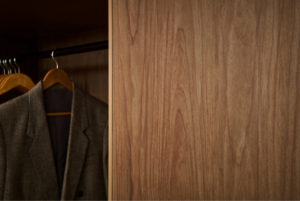 s absorb light differently than the soft tissue around them,” explained Grover. “Our new innovations mix matte and gloss in the same surface at the right scale to create a dimensional result that the eye registers as depth that isn’t mechanically there.”
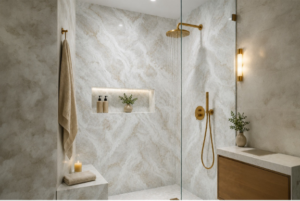
This design technique lets vinyl replicate premium stone, wood, and tile so perfectly that many people can’t tell the difference.
Below you can see the depth and texture of the vinyl film replicating wood, stone, and tile.
Easy Upkeep and Lower Total Cost
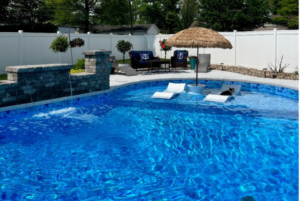
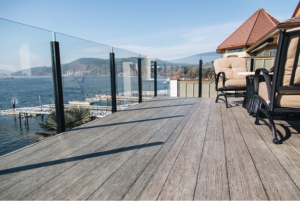
Inside and outside the home, modern vinyl delivers high-end performance without the high-end chore list. Traditional materials like wood siding, fencing, or decking require regular painting, sealing, and specialized cleaning to prevent rotting, stains, or fading.
Vinyl avoids all that upkeep, maintaining its color and beauty for decades while only requiring an occasional wash or wipe down.
The low-maintenance features can translate into big savings in both time and money. Homeowners can skip the expensive cycle of buying wood stains and sealants or paying for post-installation labor.
Engineered for Long-Term Performance
Vinyl’s recent innovations aren’t just about aesthetics. Beneath those beautiful finishes is a material engineered for serious, long-term durability. Modern vinyl products, whether underfoot or on the exterior wall, are designed to handle the chaos of everyday life and protect the home.
In flooring, this means manufacturing scratch-resistant wear layers and entirely waterproof cores. These engineered layers let luxury vinyl planks handle foot traffic, dropped items, and messy spills without warping, denting, or wearing down over time.
On the outside of the home, it means designing panels and trim that work as a team. The entire system is engineered to allow the vinyl to naturally expand and contract with the changing seasons while withstanding moisture, standing up to high winds, and resisting heavy impacts.
“A premium homeowner experience starts with a product that looks beautiful on day one and continues to perform for years with minimal upkeep,” Cotterman said. “For vinyl siding, that means strong curb appeal, consistent color, dimensional stability, impact resistance, weatherability, and low-maintenance performance. The best exterior products combine aesthetics, performance, and ease of ownership.”
The Science of Sustainability: Tracking the Full Life Cycle
This focus on long-term performance leads directly into vinyl’s modern sustainability story. In home design today, sustainability is increasingly becoming an expectation rather than a differentiator. True luxury isn’t wasteful: Great style and environmental responsibility now go hand in hand.
To understand the true environmental impact of a building material, you have to look at the entire picture. Connie Hensler, Director of Sustainable Materials at Interface, has long pushed the industry to utilize rigorous Life Cycle Assessments (LCAs), scientific research that tracks a product’s environmental footprint from raw material extraction all the way through manufacturing, shipping, use, and disposal.
When measured through this comprehensive lens, modern vinyl reveals a massive structural advantage: It is incredibly resource-efficient. Because vinyl achieves high-end durability within a thin, low-mass profile, it requires significantly fewer raw materials to manufacture than many alternative materials.
According to Hensler, this optimized, lower-mass design creates a reduction in environmental impact across the entire life cycle. A lighter product means less energy is consumed during manufacturing and fewer carbon emissions are generated during transportation.
But resource efficiency is only half of the equation; the material also has to last. “We have a saying at Mannington that the longer a flooring product stays on the floor ‘in service,’ the more sustainable it is,” said Shane Totten, Vice President of Sustainability at Mannington Mills. “That long life cycle avoids additional raw materials and energy to create new product.”
By combining low-mass manufacturing with in-service longevity, modern vinyl delivers a double win for the environment: it frequently uses less energy to make and less fuel to ship, while staying in place for decades.
The New Era of Smart, Sustainable Luxury
The definition of a luxury home has fundamentally shifted. It is no longer measured by how much a homeowner can spend on expensive, high-maintenance materials, but by how intelligently a space balances beauty, performance, and responsibility.
Modern vinyl has earned its place in residential design by delivering high-end looks without the weekend maintenance chores. It proves you can design a beautiful, high-performing home that is safe, budget-friendly, and sustainable.